Are you looking for simple and easiest circuit for converting 12V DC to 220V AC? This simple inverter circuit can convert 12v dc to AC voltage. This circuit diagram consist of few number of electronic components. The main component is TIP2955 PNP transistor which is acts as a oscillator. This circuit is very easy to build in a breadboard or PCB. This is a very basic inverter circuit I’m sharing for electronics engineering students and hobbyist. In this article you will get the complete information’s about the circuit diagram, components list and working explanations of this two transistor inverter.
TIP2955 Pinout
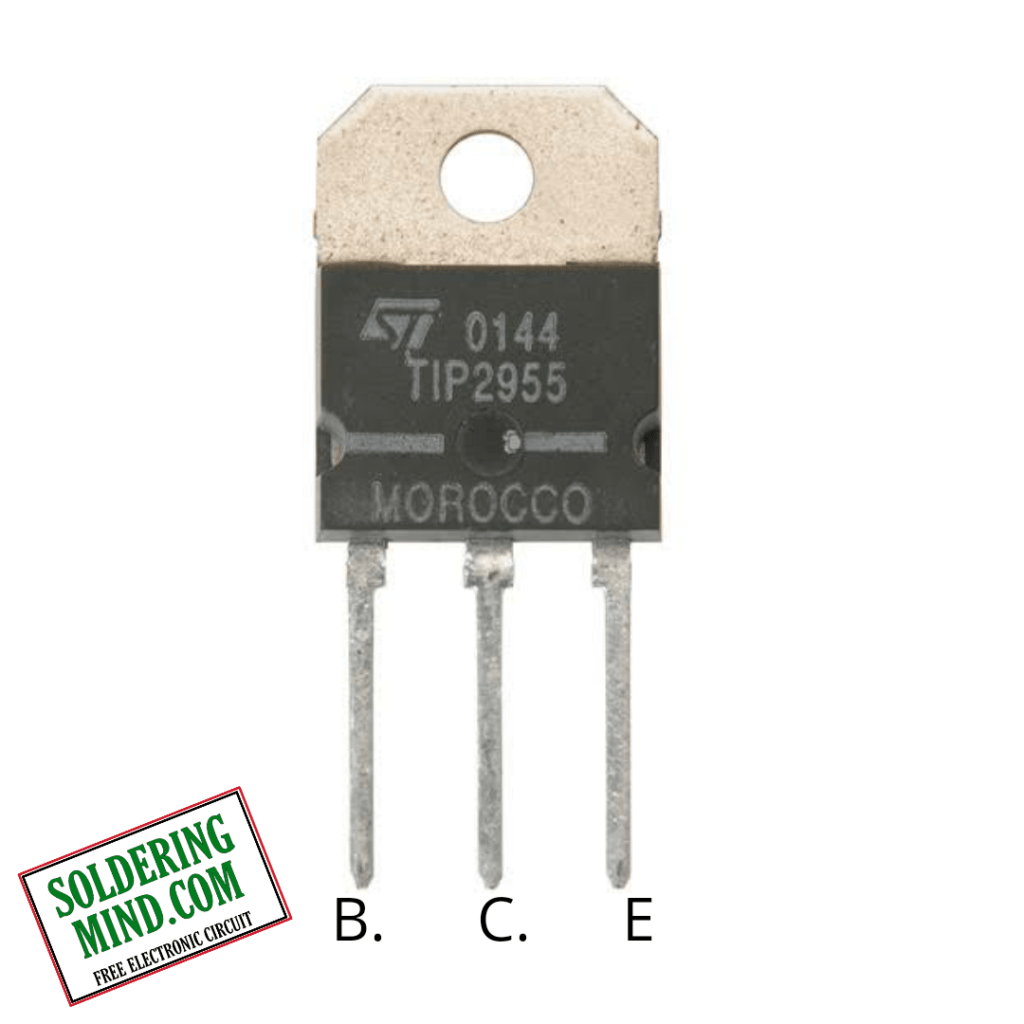
| Pin Number | Pin Name | Function |
|---|---|---|
| 1 | Base (B) | Controls the transistor switching |
| 2 | Collector (C) | Connected to the transformer |
| 3 | Emitter (E) | Connected to ground (negative) |
Components Required
| Component | Specification | Quantity |
|---|---|---|
| Transformer | 12-0-12V to 220V AC | 1 |
| Transistor | TIP2955 | 2 |
| Resistor | 680 Ohm, 0.5W or 1W | 2 |
| DC Power Supply | 12V Battery or Adapter | 1 |
| Switch | ON/OFF Switch | 1 |
| Connecting Wires | – | As required |
| Heat Sink (optional) | For TIP2955 transistors | 2 |
| PCB or Breadboard | For circuit assembly | 1 |
Simple Inverter Circuit Diagram
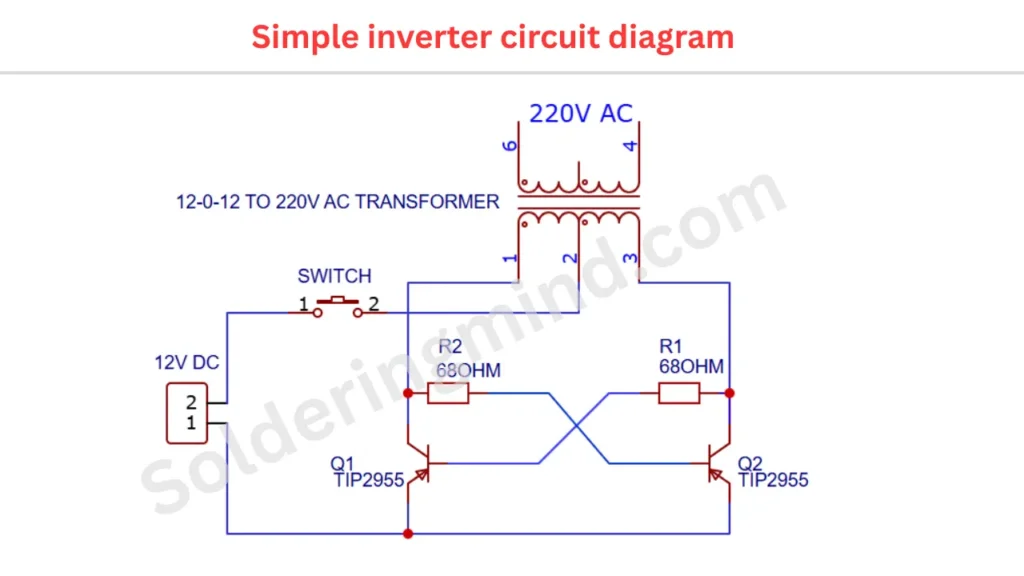
Working Explanation
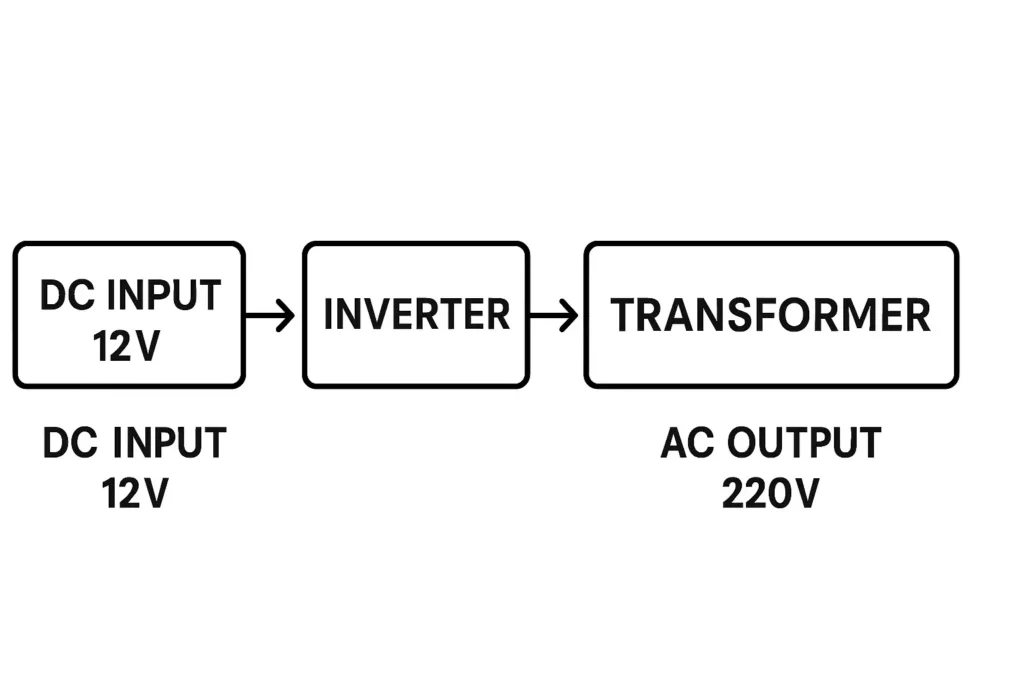
This inverter circuit will converting the 12V DC supply into 220V AC supply using the 12-0-12 step up transformer and TIP2955 PNP transistor circuit. When the switch is on the resistors connected with the base pin of two TIP2955 transistor is providing the base voltage. R1 and R2 value is 68 ohms and providing the base voltage in a push pull pattern. This on and off function of transistor inducing a magnetic field inside the connected transformer coil. This time the transformer steps up the voltage from 12V to approximately 220V AC at its secondary winding.