The temperature has huge effect on batteries? The higher temperature buildup inside of the batteries makes it to explode or caught fire on it. Maintaining the proper temperature is the key to proper maintenance of batteries. When temperature raises chemical reactions are happening fast and more heat producing which will also causes more heat.
What is Thermal Runaway in Batteries?
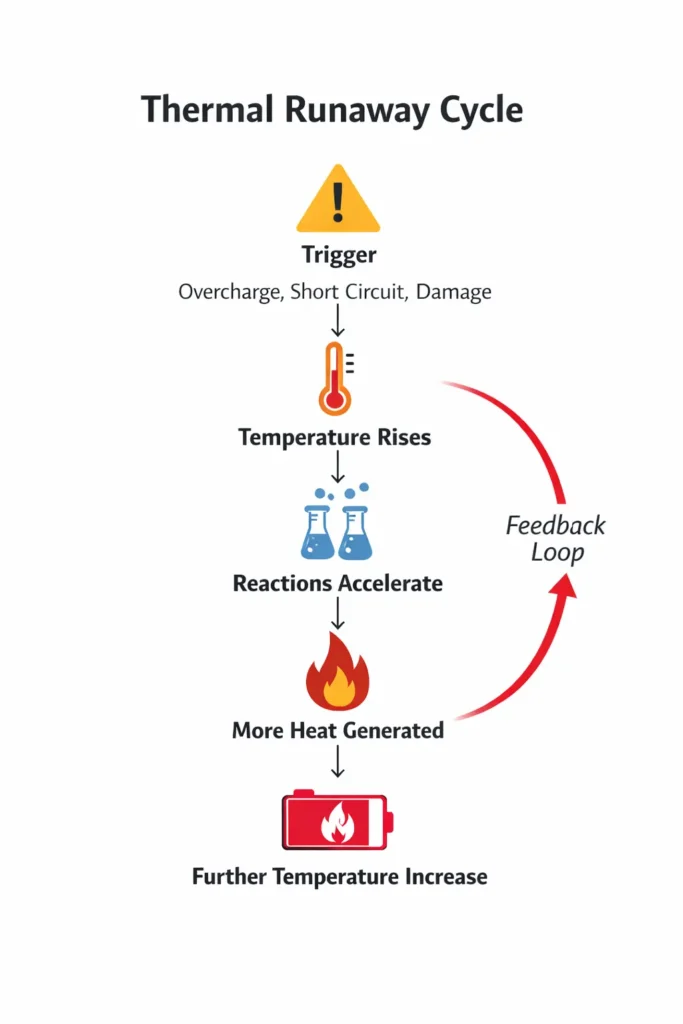
The thermal runaway in battery is a dangerous process. It is acts like a cyclic process. When the battery or any device getting hotter which will speeding up the chemical reaction inside of it, as a result of reaction more heat is produces and starts to fire or exploding the battery or device.
Why Thermal Runaway Occurs in Batteries?
There are some important reasons for thermal runaway of batteries, The major causes are discussing here,
During the charging and discharging heat is produced. When the heat is normally not dissipated which will leads to faster chemical reaction inside the batteries and more heat is generated and the battery gets fire or damages quickly. This process is a self-amplifying cycle of temperature and battery goes to thermal runaway.
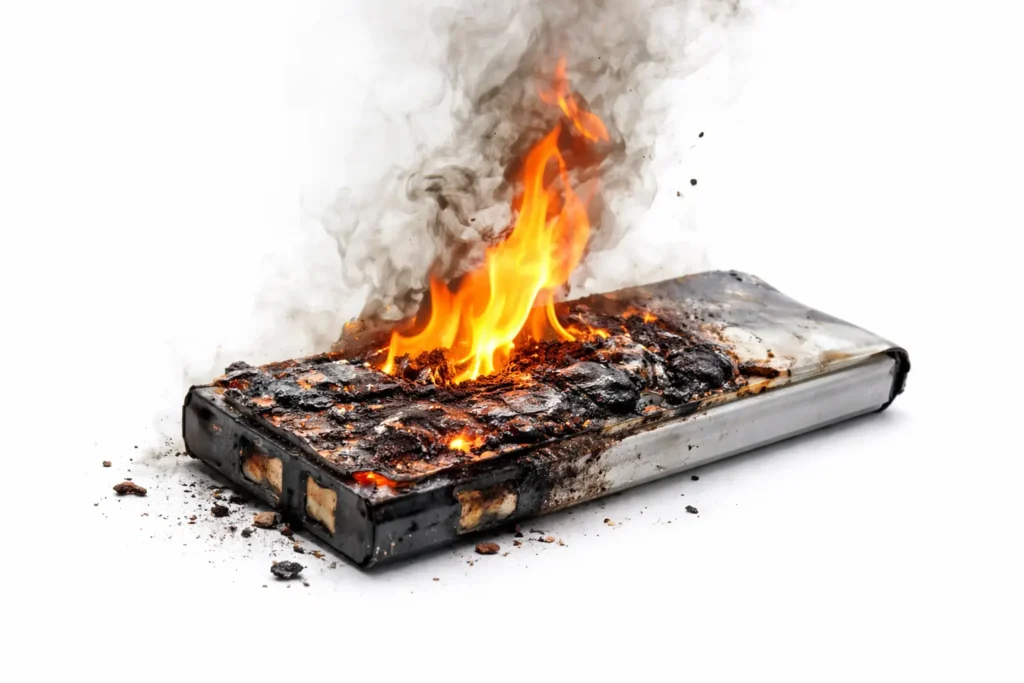
Another major cause is physical damage or manufacturing defect of batteries. Crushed, punctured batteries will develop internal short of batteries. When the battery in short circuit condition, excess current flows through the battery internally. This large amount of current flow lead to heat build up and fire.
Effects of Thermal Runaway
The thermal damage of batteries is very dangerous phenomenon to the device and surrounding area. This also danger to people when the mobile batteries explode in pocket or hand. The most critical effect is a rapid rise in temperature, which can cause the battery to catch fire or explode, especially in lithium ion batteries. This makes thermal runaway a major safety risk in consumer electronics, electric vehicles and energy storage systems.
Another effect is permanent battery damage. Once the thermal runaway occurred in the battery which will completely destroy the internal structure and connections of battery. This leads to loss of capacity, reduced efficiency and complete battery failure. After the cycle starts the battery is in unusable condition.

The Thermal runaway is also causes release of toxic gases and smoke to the surrounding area. If the battery is in closed room the effect will be high. Batteries can also emit flammable and harmful gases like carbon monoxide and hydrogen fluoride, which are dangerous to inhale and can spread fire to nearby objects.
Prevention & Control
To prevent Thermal runaway you need to focus on the battery temperatures monitor, Loss connections of battery terminals, charging and discharging conditions. The important method is to implement a battery management system called BMS. Which will continuously monitor the voltage, current and discharging current.
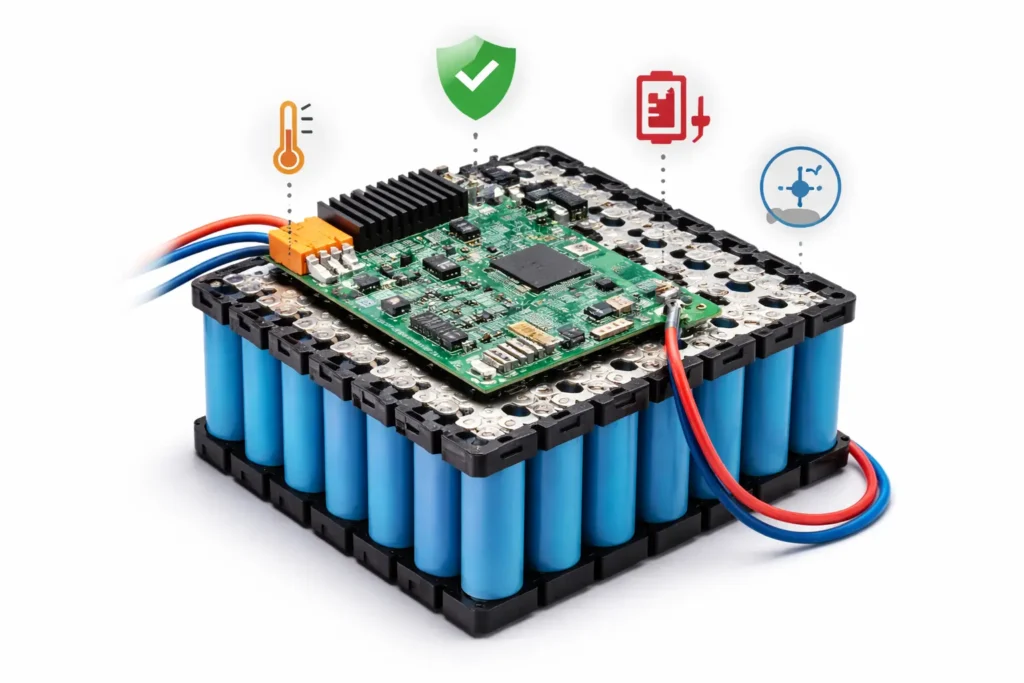
Another key method is proper thermal management. Use heat sinks, cooling fans, liquid cooling systems and proper ventilation to remove excess heat from the battery. In electric vehicles thermal insulation and spacing between cells are also used to prevent heat from spreading from one cell to another.
Safest charging and discharging of battery plays a major role. Using proper charger or charging voltage, current is important. Generation of extreme hot on your battery is risk. Smart chargers with temperature and voltage cutoffs help to prevent overcharging and overheating.
Conclusion
The thermal runaway is a serious safety risk associated with the batteries, mostly the lithium ion batteries. When the battery heat build-up leads to self-accelerating cycle which build up more heat inside of battery. The effect will be fire and explosion of the battery. This makes the thermal runaway is a critical concern in modern applications such as smartphones, electric vehicles and energy storage systems.
Understanding the causes and effects of thermal runaway will helps to avoid this issues. The factors like overcharging, internal short circuits, physical damage and poor thermal management play a major role in triggering this phenomenon. Once this initiated, thermal runaway can cause permanent battery failure, release of toxic gases and severe damage to the surrounding areas.
With proper prevention and control measures like implementing Battery Management Systems (BMS), effective cooling techniques, safe charging practices and protective circuit design will reduces the chance of thermal runaway. Therefore, improving battery safety through smart design and monitoring is essential for safe use of batteries in everyday and industrial applications.