Rotary encoder and potentiometer are two types of controller. When we are comparing with the rotary encoder vs potentiometer, where the main difference is based on how they detect it and what is it’s output state.
Introduction
A potentiometer provides an analog signal based on the physical position of the knob. This will make it as a simple and continuous control in volume adjustment of amplifier.
On the other hand, rotary encoder can generate digital pulses when it rotating, so it will allow the infinite rotation and accurate step counting. Based on these properties it is suitable for applications that require accurate and reliable position tracking. If your project requires high precision and durability you can choose rotary encoder. But if you just need a basic analog input, then potentiometer is usually enough.
What Is a Rotary Encoder?
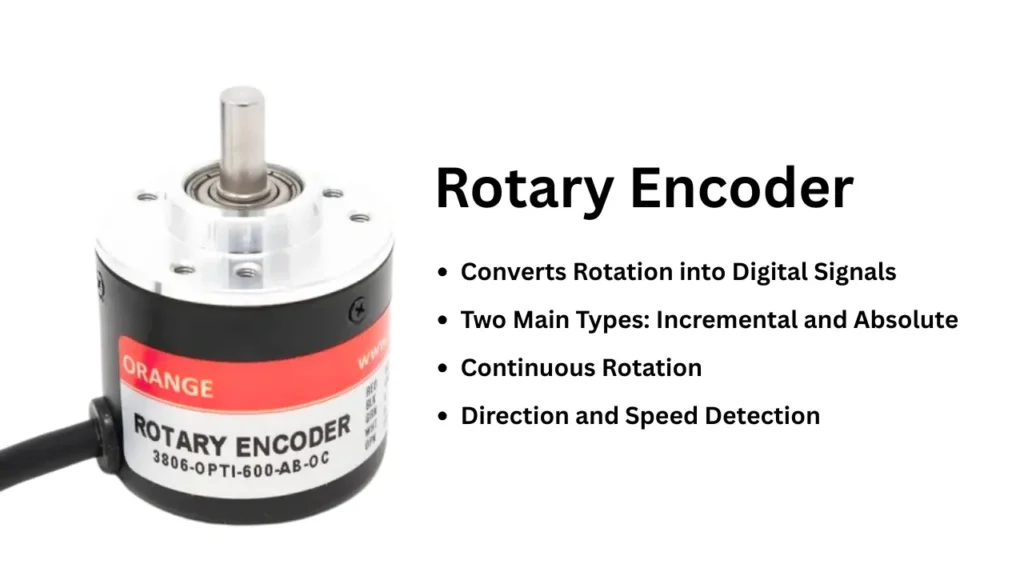
The rotary encoder is a popular electronic device that used in many modern audio amplifiers and other electronic circuits with microcontrollers. This rotary encoder is also a electro mechanical device which will converting the angular position, motion of shaft into digital signals.
It is commonly using in various applications such as amplifiers volume control, menu selection and other functions to determining the position, speed or direction of rotation. Their are two types of rotary encoders are available which is,
- Incremental Encoder
- Absolute Encoder
In incremental encoders the outputs pulses as the shaft rotates. which will only provides information about the movement of shaft not the absolute position. Comes with common outputs of A and B channels and sometimes a Z (index) pulse.
The Absolute Encoder, which will Provides a unique binary or digital code for each shaft position. it can determine the exact position even after power loss. This type of encoder is more complex and expensive than incremental encoders. Know more about why rotary encoders using in electronic circuits.
Applications
- In Robotics, position and speed control of motors.
- CNC machines.
- Industrial automation.
- Consumer electronics like volume knobs.
- Elevators and conveyor systems.
What Is a Potentiometer?
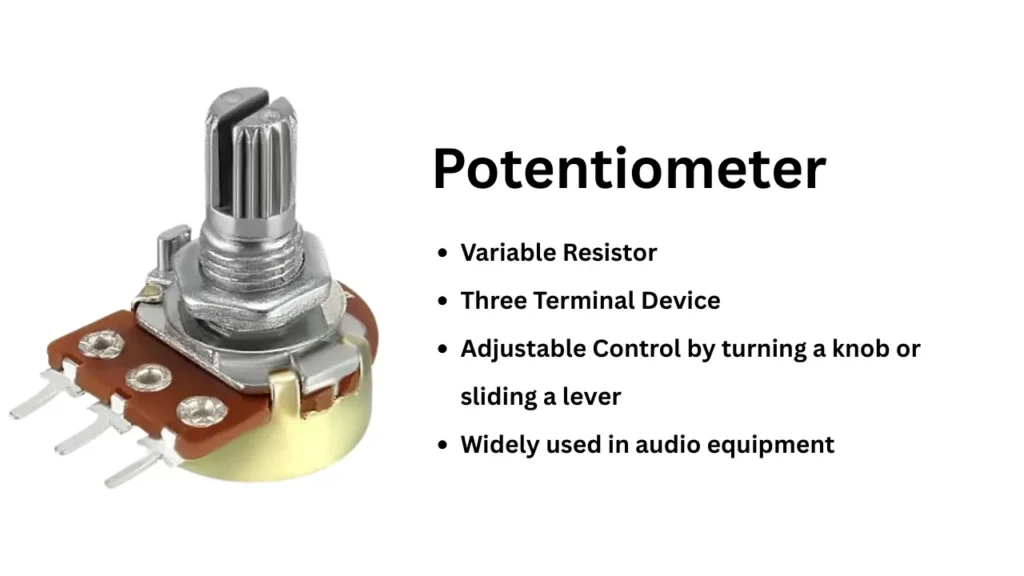
The potentiometer is a common electronic component present in many audio amplifier circuits and voltage regulators. This is a type of knobs or slider that can control the flow of current through it. when you rotating the shaft or the knobs you’re adjusting how much electricity goes through, which changes the internal resistance of it.
When you adjusting the connected applications functions like brightness, speed, or sound is adjusted. Inside, it has a strip of material that electricity flows through and a movable contact that slides along it. This will changing the resistance. This makes potentiometers useful for controlling lights, motors, and audio equipment.
Applications
- Volume Control.
- Light Dimming.
- DC Motor Speed Control.
- Measuring Devices.
- Tuning Circuits of TV and Radio.
Rotary Encoder vs Potentiometer
| Feature | Rotary Encoder | Potentiometer |
|---|---|---|
| Type of Output | Digital with pulses/signals. | Analog (variable voltage) |
| Rotation Limit | Can rotate continuously 3660 degree. | Limited rotation range (typically 270°) |
| Wear and Tear | Less wear (non-contact types available). | More wear due to mechanical contact. |
| Accuracy | High accuracy and resolution. | Lower accuracy compared to encoders. |
| Lifespan | Longer lifespan. | Shorter lifespan due to physical wear. |
| Direction Detection | Can detect direction of rotation. | Cannot detect direction. |
| Use in Applications | Used in robotics, CNC machines, digital knobs. | Used in audio controls, dimmers, analog settings. |
| Output Stability | Not affected by noise easily. | May have signal noise or drift over time. |
| Cost | Generally more expensive. | Generally cheaper in price. |
Conclusion: Which One Should You Choose?
The option of choosing rotary encoder or potentiometer for your project is depending on the specific applications needs.
Choose a Potentiometer if you need absolute position. This means you always know the position when powered on. Perfect for if you’re working on simple analog applications like volume controls, dimmers, or analog user interfaces. The potentiometers are usually cheaper and require minimal electronics. ✅ Potentiometer is best for: Audio equipment, basic control knobs, analog circuits.
You can choose a Rotary Encoder if you need a digital output or need to interface with microcontrollers or digital systems. The encoders can rotate without end and have longer lifespans. Used in robotics, CNC machines or motor control. ✅ Rotary encoder is best for: Industrial controls, robotics, precise digital input, user interfaces requiring a high durability.