The Diodes are two-terminal electronic components used to filter the AC voltage to DC voltage. However all the types of diodes do not do this same function. In this article Let’s check out the Difference between Rectifier Diode and Zener Diode.
What is a Rectifier Diode?
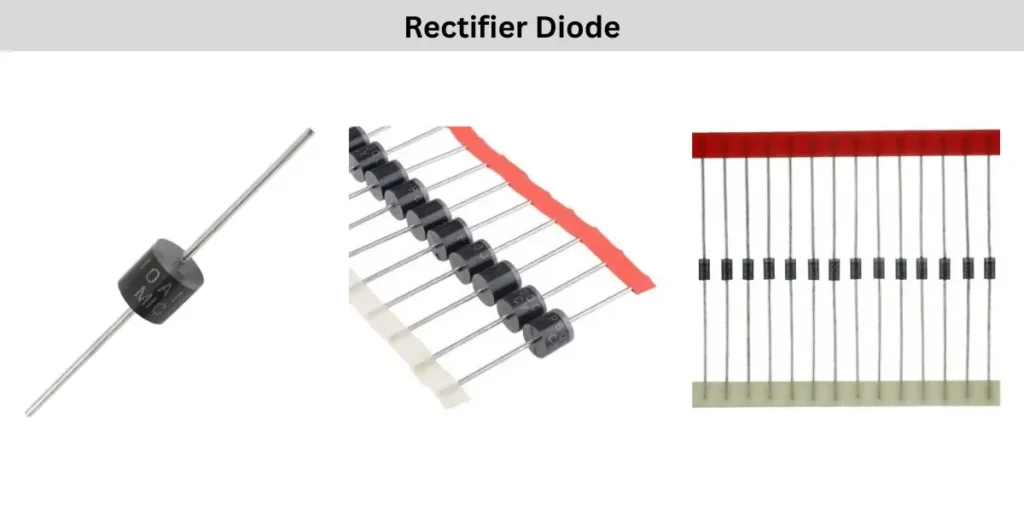
The Normal rectifier diodes and Zener diodes are entirely different from their normal looks nd behavior. From the name, the Rectifier diode is for rectification and Zener means the reverse current can flow through the diode if a specific voltage range is reached.
A rectifier diode is a standard diode used to convert AC voltage to DC voltage. It allows the current to conduct in one direction and also prevents the conduction in the reverse direction. Rectifier diodes are used in applications like converting AC voltage into DC from a step-down transformer through the bridge rectifier connection. The most common rectifier diode is a silicon diode. The silicon diodes are very useful electronic components because of their use of filtering AC voltage.
Rectifier diodes are available in different sizes also. The size of the diode depends on the Current and voltage handling capacity. The common current ratings for the diodes are 1A, 3A, and 6A. The Rectifier diodes are also used in many battery charger circuits and power adapters. The bridge rectifier is one of the most common rectifier circuits used in AC to DC voltage rectification.
It consists of four diodes connected parallel to each other to convert AC voltage to DC voltage. The Schottky diodes are also a different type of diode that have lower voltage drops and it is commonly used in high-frequency switching circuits and low-power applications. Rectifier diodes are used in many electronic circuits today and can give a smooth and consistent source of AC to DC voltage rectification.
What is Zener Diode?
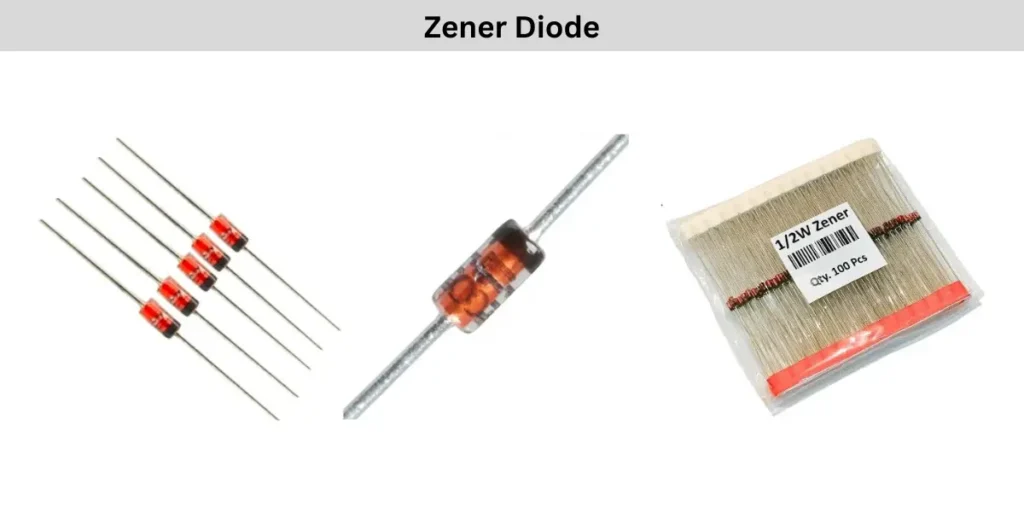
The Zener diode is a special type of semiconductor diode is designed to allow the current to flow not only in the forward direction like a regular diode but also in the reverse direction when the voltage exceeds a specific value. The breakdown voltage is also called as the Zener diode breakdown voltage. This unique property of this diode is due to the Zener effect which occurs at a specific voltage set by the diode.
This feature will maintain a stable voltage across its terminals and circuit. The normal rectifier diodes will damage and fail at high reverse voltages. in this situation the Zener diodes are specifically designed to operate in this breakdown region without damage.
The Zener diodes are widely used in voltage regulation circuits, where they help to maintain a constant output voltage without any fluctuations in input voltage or variations in load. They are commonly found in power supplies, voltage reference circuits, overvoltage protection systems, and signal clipping applications. The zener diode also acts like a voltage regulator in the circuit so it is a protector component for voltage-sensitive devices.
Difference between Rectifier Diode and Zener Diode
| Feature | Rectifier Diode | Zener Diode |
|---|---|---|
| Purpose | Used to convert AC to DC. it is called rectification. | Used for voltage regulation and stabilization. |
| Current Flow | Allows current in both forward and reverse directions. But in the reverse direction voltage conducts after the breakdown voltage of the diode. | Allows current in both forward and reverse directions. But in the reverse direction voltage conducts afterthe breakdown voltage of the diode. |
| Reverse Breakdown | Not designed to operate in reverse breakdown; may get damaged. | Operates in reverse breakdown region without damage. |
| Voltage Regulation | Cannot regulate voltage. | Maintains a constant voltage when reverse-biased. |
| Application | Power supplies, rectifiers in circuits. | Voltage regulators, overvoltage protection, reference voltage sources. |
| Breakdown Voltage | Has a high breakdown voltage and fails if exceeded. | Has a well-defined, controlled breakdown voltage. |
| Symbol Difference | Standard diode symbol (triangle with a line) | Similar to a diode but with bent edges on the cathode line. |
FAQ
The Zener effect is a phenomenon occurring in the Zener diode. When the Zener diode is connected to the Supply in reverse polarity connection, the Zener diode starts to conduct at a certain voltage level reached this is called Zener breakdown voltage. First a sharp breakdown will occur this will allow the Zener diode to flow large amount of current in reverse bias mode.
The rectifier diode is not used instead of a Zener diode in circuit for voltage regulation. Because they have different properties and characteristics in working. Rectifier diodes are designed to rectify the AC voltage into DC voltage. The rectifier diode conduct the current in only in forward biasing and blocking it in the reverse bias. In high reverse voltage situation across the rectifier diode it get damaged. The Zener diodes are designed to operate in reverse bias and it maintaining a stable voltage even under high reverse current situations. So the Zener diodes ideal choice for voltage regulation. The rectifier diodes cannot regulate voltage and are not suitable for this purpose.