Resistance is the opposition to the flow of current, heat or other forms of energy. It’s a measure of how much material or object resists the flow of energy through it. They regulate the flow of electric current and divide to voltage and protect the electrical appliances from damage due to excessive current.
Introduction
The resistance can be compared to a gently flowing river through a landscape, and its flow represents the electric current. If a dam is built across through the river it represents resistance. Firstly the river flowed easily but a dam grew stringer. The rivers flow began slower. The water had to work harder than and some of water stuck behind the dam. This way resistance help the current to balance the flow of current in correct voltage to the electric appliances.
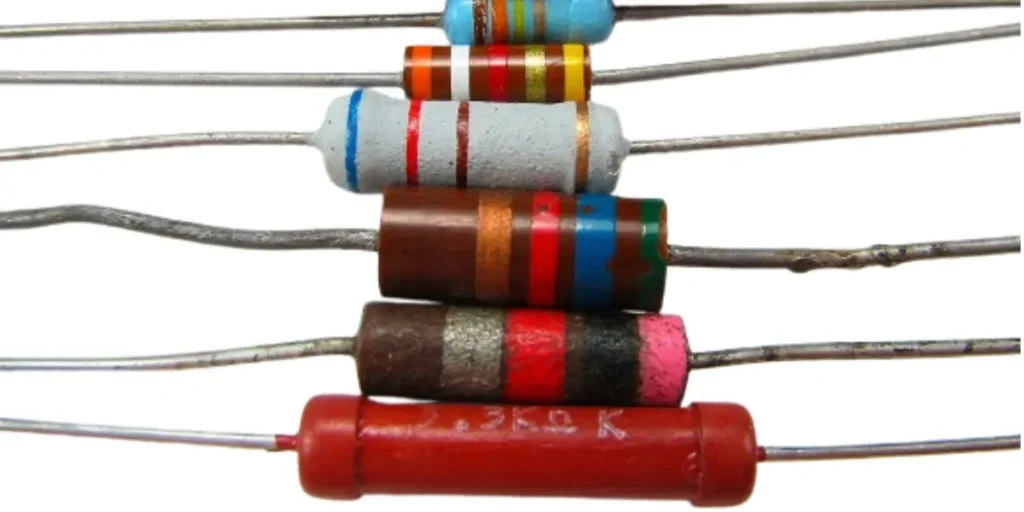
What is a Resistor?
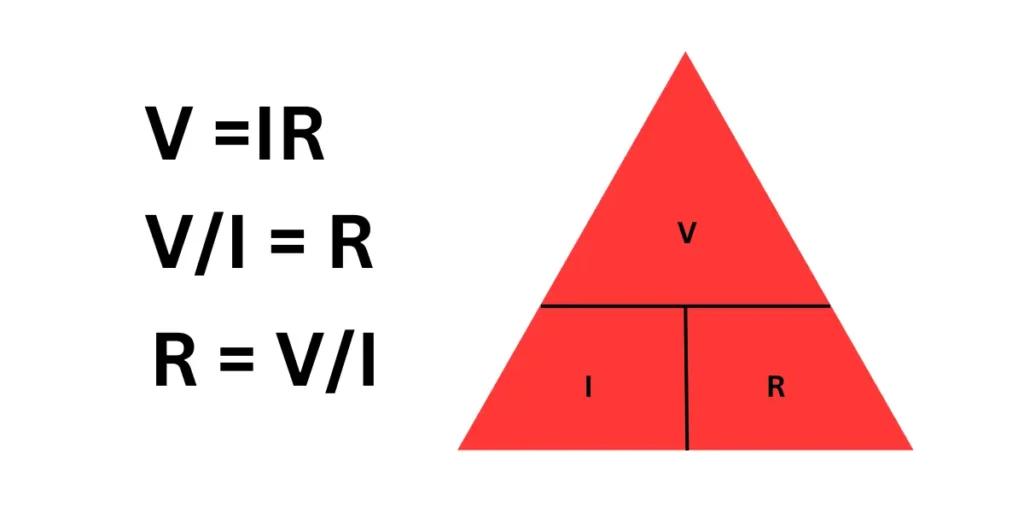
A Resistor is an object or device that slows down or opposes the flow of electric current. It works according to Ohm’s law by George Simon Ohm, which states that the voltage across a resistor is directly proportional to the current flowing through it (V=IR). The unit of resistance is,
V=IR
V=voltage
I=current
R=resistance
Resistors are made of various materials such as carbon, metal, ceramic, wire, and semiconductor materials. The value of resistance can be divided into ohms to megaohms, according to the application.
Functions of Resistance In Circuits
Current limiting
Current limiting is a technique used to restrict the amount of current flowing through a circuit. It prevents excessive current damage to electric components. Refuse the risk of overheating, which leads to fires. Ensure the safety of the device operates within safe parameters
Voltage division
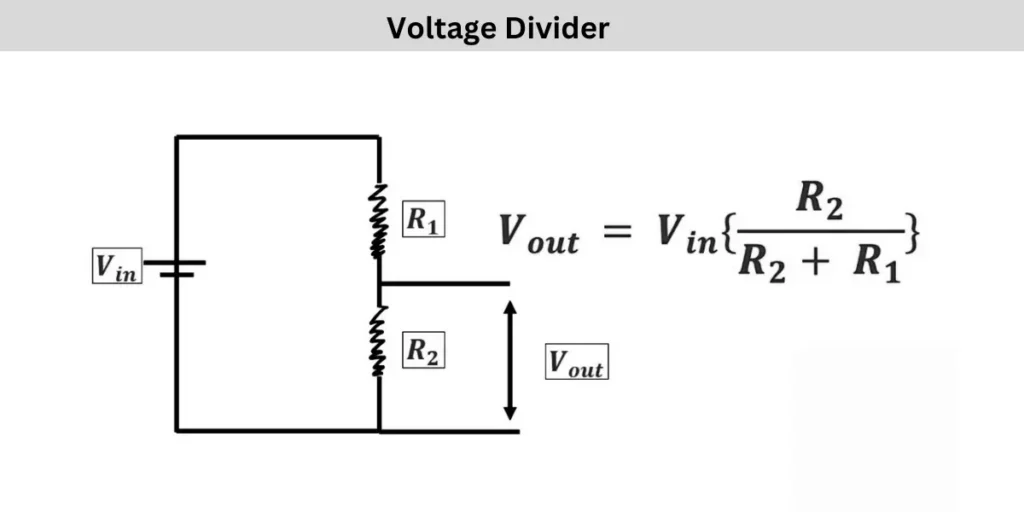
Voltage division is a technique used to divide a voltage into smaller portions using resistors.
Vout=(R2/(R1+R2))×Vin
R1=Resistance of first resistors
R2=Resistance of second resistor
Vin=Input voltage
It is used as a regulator to step down voltages, attenuate signals in audio and radio applications and as , measurement circuits to scale down voltages.
Heat dissipation
Resistors convert electrical energy into heat energy, which must be dissipated to prevent overheating. They are decided to control high power levels to control high power levels and prevent overheating of other components.
Biasing Active Components with Resistors
Resistors play a crucial role in biasing active components such as transistors. They are connected to the base of a transistor which helps to set the base voltage and current. A resistor connected to the emitter of a transistor helps to stabilize the emitter current and voltage. The transistor helps to limit the collector current and voltage. Signal Conditioning Using Resistors. The Resistors play a crucial role in signal conditioning by modifying the signal to make it suitable for processing or measurement.
Types of Resistors
Fixed Resistors
Fixed resistors have a fixed resistance value. They are Available in various resistance values and tolerances. Fixed resistors can be used in a wide range of applications, including voltage division, filtering, and impedance matching
Variable Resistors
Variable resistors allow for adjustable resistance values. Common types include potentiometers, rheostats, and trimmers. They are used in applications such as volume controls, tone controls, and calibration circuits
Power Resistors
The power Resistors are designed to manage high power levels such as current. They often used in applications such as power supplies, motor control circuits, and audio amplifiers. Power resistors are available in various package styles, including through-hole, surface-mount, and chassis-mount
High Frequency Resistors
High-frequency resistors are designed for use in high-frequency applications, such as radio frequency (RF) circuits and microwave circuits. Typically have low inductance and capacitance to minimize high-frequency losses. They are often used in applications such as amplifiers, filters, and impedance matching circuits
Resistance in Practical Life
Electrical Appliances
- Light bulbs: Resistance in the filament converts electrical energy into heat and light.
- Toasters: Resistance in the heating coils converts electrical energy into heat.
- Electric heaters: Resistance in the heating elements converts electrical energy into heat.
Electronics
- Amplifiers: Resistance is used to control the gain of the amplifier.
- Filters: Resistance is used to filter out unwanted frequencies.
- Voltage dividers: Resistance is used to divide a voltage into smaller parts.
Automotive Systems
- Braking systems: Resistance is used to slow down the vehicle by converting kinetic energy into heat.
- Starter motors: Resistance is used to limit the current flowing through the motor.
- Alternators: Resistance is used to regulate the output voltage.
Medical Equipment
- Defibrillators: Resistance is used to control the flow of electrical energy to the heart.
- Pacemakers: Resistance is used to regulate the flow of electrical energy to the heart.
- Medical imaging equipment: Resistance is used to control the flow of electrical energy to the imaging coils.
Home Appliances
- Water heaters: Resistance is used to heat the water.
- Hair dryers: Resistance is used to heat the air.
- Electric blankets: Resistance is used to heat the blanket.
Industrial Applications
- Power transmission lines: Resistance is used to reduce energy losses during transmission.
- Motors: Resistance is used to control the speed and torque of the motor.
- Generators: Resistance is used to regulate the output voltage.
Safety Devices
- Fuses: Resistance is used to detect excessive current flow and disconnect the circuit.
- Circuit breakers: Resistance is used to detect excessive current flow and disconnect the circuit.
- Surge protectors: Resistance is used to absorb voltage spikes and protect equipment.
Conclusion
Resistance plays a crucial role in a circuit as it opposes the flow of electric current. The amount of resistance in a circuit determines the amount of current that flows through. Resistance helps divide the voltage in a circuit, allowing for the creation of voltage drops across different components.
The type of material used affects the resistance of a component. Here’s a glimpse into the future of the role of resistance in circuits. New materials with unique resistance properties will be developed, enabling the creation of smaller, faster, and more efficient circuits.
As energy efficiency becomes a growing concern, resistance will play a critical role in minimizing power consumption and heat generation. Resistance will be essential in the development of quantum computing, where it will be used to control the flow of quantum bits (qubits).