When you are working with electronic circuits or small PCB’s selection of soldering wire is very important for improving the quality, durability and quality in soldering. The most common wire types for soldering is Sn63pb37, Sn60Pb40 and various lead free alternatives. each type of these wires has advantages based on the applications. In this article. We are going to compare the types of solder wire and decide which one is best for your needs.
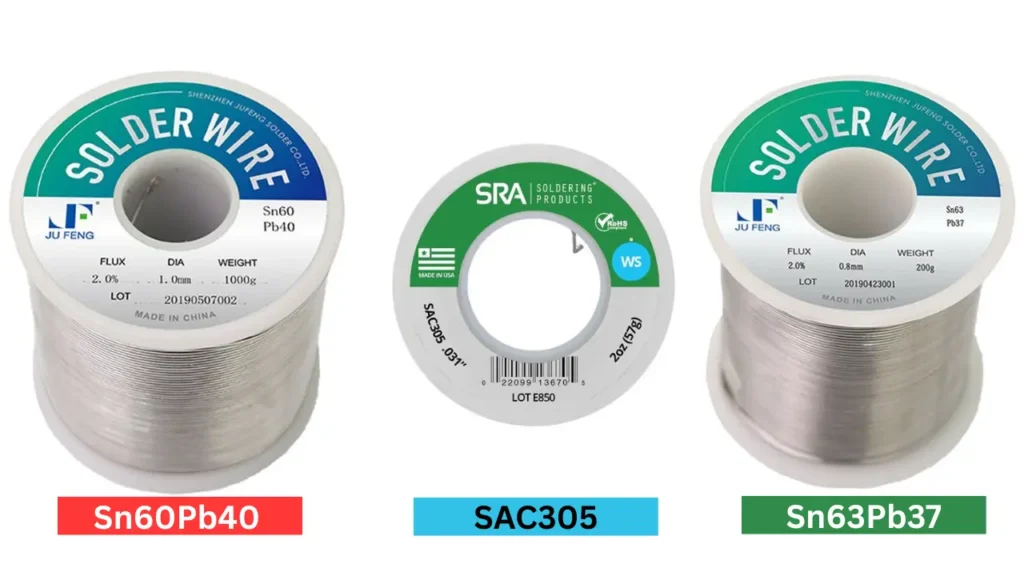
What Do Sn63Pb37 and Sn60Pb40 Mean?
These both are leaded soldering wires used in soldering and which has excellent performance and low melting point. The Sn is representing the tin material and Pb represents the lead. So the Sn63Pb37 means 63% of Tin and remaining 37% is Lead. In Sn60Pb40 means it has 60% of Tin and 40% Lead.
Comparison of Common Solder Wire Types
Sn63Pb37 Solder, The Eutectic Alloy
This type of solder wire is perfect for soldering fine pitch SMD and through hole components. Its melting point is around 1830 Celsius. It is a very sharp melting point.
| Pros | Cons |
| Instant transition from solid to liquid (no plastic phase). | Contains lead (not RoHS compliant). |
| Forms strong, shiny, and reliable joints and Less risk of cold joints. | Slightly higher cost than Sn60Pb40. |
Sn63Pb37 is good choice for professional electronics work and soldering delicate components.
Sn60PB40 Solder Wire
This type of solder is a perfect choice for hobbyist and general purpose soldering. melting point of this solder wire is around 1830 Celsius to 1900 Celsius.
| Pros | Cons |
| Slightly cheaper than Sn63Pb37. | Has a short “plastic” phase during cooling, which can lead to cold joints if disturbed. |
| Performs well for most electronics tasks. | Not as smooth or clean as Sn63Pb37. |
Lead Free Solder (eg, SAC305)
This type of material is RoHS (Restriction of Hazardous Substances) complaint but working with this type of material is difficult because of its higher melting point of 217 degree Celsius to 221 degree Celsius.
| Pros | Cons |
| Environmentally friendly. | Requires higher temperatures and this will increases risk of heat damage to components. |
| Mandatory for commercial electronics in many countries. | Dull looking solder joints and Joints may be more brittle over time. |
Which Solder Wire Is Best?
| Solder Type | Best For | Pros | Cons |
|---|---|---|---|
| Sn63Pb37 | Professional electronics & SMD | Eutectic, easy to use, shiny joints | Not RoHS |
| Sn60Pb40 | General electronics & hobbyists | Affordable, good performance | Risk of cold joints |
| Lead Free (SAC305) | RoHS compliance | Environment-friendly | Harder to use, higher temps |
If you are working with DIY projects or repairing and assembling the PCB the Sn63Pb37 solder wire is a best choice due to its characteristics and ease of use.